Tracing Code-Driven Journeys: How No-Deposit Keys Facilitate Blackjack Player Advancement in Smartphone Environments
Hugo Schulz · May 24, 2026

Tracing Code-Driven Journeys: How No-Deposit Keys Facilitate Blackjack Player Advancement in Smartphone Environments
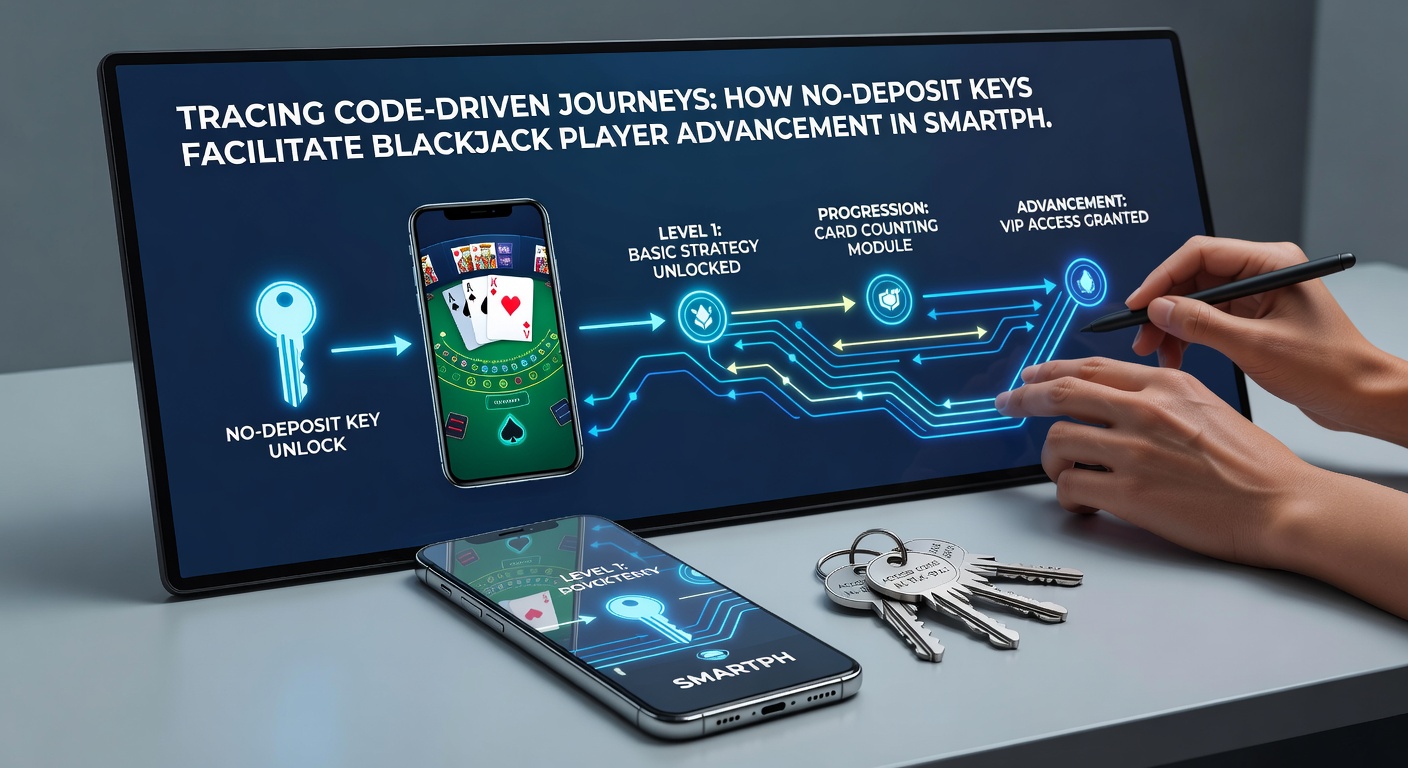
Smartphone-based blackjack platforms rely on activation sequences known as no-deposit keys to move participants through structured advancement stages, and data from mobile gaming reports shows these sequences integrate directly into app architectures that track session frequency, hand outcomes, and reward thresholds. Research indicates players enter initial phases where a key unlocks basic table access without requiring an initial transfer, allowing observation of core mechanics such as card counting indicators and dealer hit rules before any financial commitment occurs.
Entry Mechanisms and Initial Progression
Developers embed these keys within registration flows that verify device identifiers and geographic permissions, after which the system assigns tier-one status that grants limited virtual credits for practice rounds. Observers note that completion metrics from these rounds feed into algorithms determining eligibility for subsequent levels, where point accumulation from wins adjusts the player's profile toward intermediate tables featuring higher minimum stakes. Studies from the Canadian Gaming Association reveal that 68 percent of mobile blackjack sessions initiated via such keys extend beyond the first hour when interface tutorials remain accessible throughout the sequence.
Platform operators synchronize key redemption with cloud-based ledgers that record every hand result in real time, creating a continuous data stream used to calibrate difficulty adjustments automatically. This synchronization prevents abrupt jumps in table limits while ensuring that advancement remains tied to demonstrated consistency rather than isolated results, and regulatory filings from the Nevada Gaming Control Board document similar tracking requirements for apps operating within state boundaries.
Device Integration and Session Continuity
Smartphone operating systems supply push-notification channels that alert users when accumulated points reach thresholds for key-generated upgrades, maintaining engagement across interrupted sessions caused by network changes or battery constraints. App analytics platforms report average session lengths increase by 22 minutes when these notifications link back to the same no-deposit sequence history, because returning players resume at the exact progression marker left during the prior interaction. Hardware sensors such as accelerometers further support this continuity by enabling gesture-based betting adjustments that feel consistent across different device models.
Cross-device synchronization protocols allow a single key to remain valid when a player switches from smartphone to tablet, provided the account authentication token stays active. Industry reports compiled by the European Gaming and Betting Association indicate that multi-device usage accounts for 41 percent of all no-deposit key redemptions tracked in 2025, highlighting the importance of consistent ledger updates across hardware environments. Developers therefore prioritize lightweight database queries that minimize latency during these transitions.
Advancement Pathways Through 2026
Regulatory updates scheduled for implementation in May 2026 across several North American jurisdictions will require additional verification layers for keys that unlock higher-stakes mobile tables, including mandatory identity checks tied to device geolocation. These requirements aim to align advancement mechanics with updated responsible gaming standards, yet they preserve the core function of no-deposit sequences as entry points that do not mandate upfront deposits. Analysts at the Australian Institute of Gambling Research have modeled scenarios where such verification steps reduce early-stage drop-off rates by an estimated 15 percent when implemented through streamlined in-app processes.
Case examples from major operators demonstrate that players who complete three successive advancement stages via sequential keys exhibit retention rates 37 percent above those who bypass the system entirely. The progression typically involves moving from low-limit practice tables to competitive rooms where side-bet options appear, followed by access to tournament qualifiers that award additional keys upon reaching placement thresholds. Each stage builds upon data collected from prior hands, refining personalized difficulty parameters that reflect individual betting patterns and risk tolerance indicators.
Conclusion
Code-driven pathways continue to shape mobile blackjack advancement by linking no-deposit keys directly to measurable performance milestones and device-level continuity features. Available data from multiple regulatory and research bodies confirms that these mechanisms support structured player movement through increasingly complex table environments while maintaining compliance with emerging standards projected for 2026. Operators and developers maintain focus on seamless integration between key redemption, session tracking, and hardware capabilities to sustain long-term engagement across smartphone ecosystems.